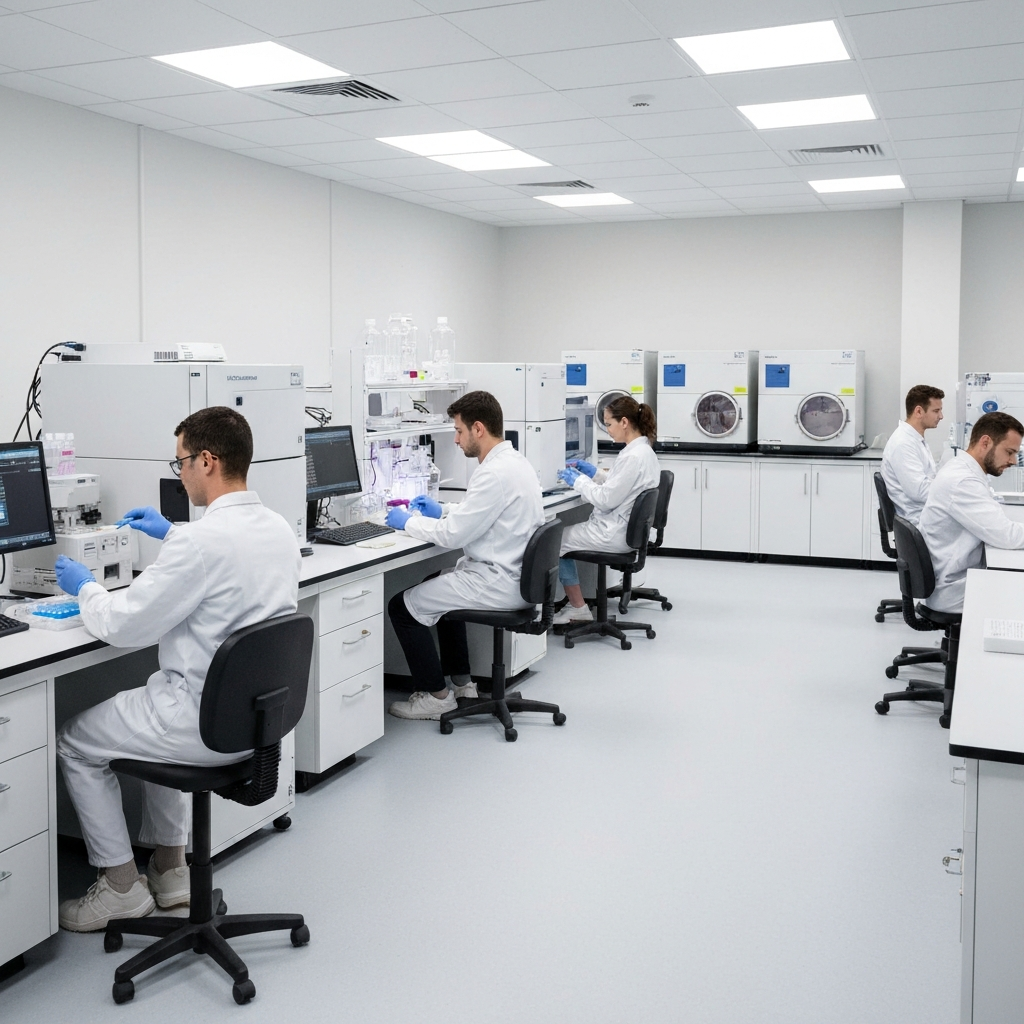




Maximizing Peptide Integrity: A Lab Guide to Proper Storage and Reconstitution
In the realm of precision research, the integrity of your experimental materials is paramount. Peptides, with their intricate structures and diverse applications, are no exception. Their stability and biological activity are highly dependent on meticulous handling, particularly during storage and reconstitution. Compromised peptide integrity can lead to unreliable data, skewed results, and wasted valuable research time and resources. At Lyos Labs, we understand the critical nature of robust experimental design, which begins with the quality and careful management of your starting materials.
This comprehensive guide is designed to equip researchers with best practices for handling lyophilized and reconstituted peptides, ensuring their maximum stability and efficacy throughout your studies.
The Importance of Peptide Integrity in Research
Peptides are sensitive biomolecules susceptible to degradation from various environmental factors, including moisture, oxygen, light, temperature fluctuations, and enzymatic activity. Maintaining peptide integrity means preserving their intended chemical structure, purity, and functional activity. Any deviation can alter their binding affinity, solubility, conformation, and biological response, thereby jeopardizing the validity and reproducibility of your research findings. Ensuring proper peptide storage and reconstitution is a fundamental step in achieving accurate and trustworthy experimental outcomes.
Proper Storage Protocols for Lyophilized Peptides
Most research peptides are supplied in a lyophilized (freeze-dried) powder form due to its superior stability compared to peptides in solution. Correct storage of these dry peptides is crucial for preserving their long-term integrity.
Short-Term Storage (Days to Weeks)
For peptides intended for use within a few days to weeks, refrigeration is generally sufficient. Store lyophilized peptides at +4°C in their original, tightly sealed vials. Crucially, ensure they are kept in a desiccated environment to prevent moisture absorption, which is a primary cause of peptide degradation. A desiccator or a sealed container with a desiccant pack is highly recommended.
Long-Term Storage (Months to Years)
For extended storage, freezing is the preferred method. Lyophilized peptides should be stored at -20°C or, ideally, at -80°C. Again, protection from moisture is paramount. Keep the peptides in a desiccated environment and in tightly sealed containers. Some highly sensitive peptides may benefit from storage under an inert gas atmosphere (e.g., argon or nitrogen) within a sealed vial to minimize oxidation, especially if the vial has been opened previously. Always store peptides away from light exposure, as UV radiation can promote degradation.
Guidelines for Peptide Reconstitution
Reconstituting your lyophilized peptide correctly is a pivotal step that can significantly impact its subsequent stability and experimental utility. This process requires careful consideration of the solvent, concentration, and mixing technique.
Choosing the Right Solvent
The choice of solvent depends on the peptide's physicochemical properties (hydrophobicity, charge, sequence) and its intended downstream application. Always aim for the lowest effective concentration of organic solvent if a non-aqueous solvent is necessary.
- Sterile Water: Ideal for highly hydrophilic peptides. Use high-purity, sterile, deionized water (e.g., Milli-Q water).
- Dilute Acetic Acid (AcOH): Solutions of 0.1% to 10% AcOH are effective for basic peptides or those with moderate hydrophobicity.
- DMSO (Dimethyl Sulfoxide) / DMF (Dimethylformamide): Excellent solvents for hydrophobic or very insoluble peptides. Use spectroscopic grade DMSO/DMF. Note that DMSO can sometimes induce aggregation or have cytotoxic effects in biological assays, so always test its compatibility. DMSO should generally not exceed 10% in aqueous solutions for cell-based assays.
- Acetonitrile (ACN): Less common for reconstitution due to its high volatility, but can be used for very hydrophobic peptides, often in combination with water (e.g., 50% ACN in water).
It is always prudent to perform a small-scale solubility test with a tiny aliquot of your peptide if you are unsure about the optimal solvent.
The Reconstitution Process
- Equilibrate Temperature: Before opening the vial, allow the lyophilized peptide to reach room temperature. This prevents condensation of atmospheric moisture onto the cold peptide, which can initiate degradation.
- Add Solvent Slowly: Carefully add the chosen solvent to the vial, ensuring it washes down any peptide adhering to the sides.
- Gentle Mixing: Do not vigorously shake or vortex the solution immediately. Gently swirl the vial or use a pipette to slowly draw and dispense the solvent to dissolve the peptide. Excessive agitation can cause denaturation or aggregation, particularly for larger peptides or those prone to secondary structure formation.
- Observe Dissolution: Allow sufficient time for complete dissolution. Some peptides may take longer to dissolve than others.
- Target Concentration: Reconstitute to a higher stock concentration (e.g., 1-10 mg/mL) that is amenable to further dilution for your experiments.
Aliquotting for Enhanced Stability
Once reconstituted, it is highly recommended to aliquot the peptide solution into smaller, single-use portions. This practice minimizes the number of freeze-thaw cycles a peptide undergoes, which is a major contributor to degradation. Use sterile microcentrifuge tubes or cryogenic vials suitable for your storage temperature.
Storage of Reconstituted Peptide Solutions
Storing peptides in solution presents a greater challenge than storing them in lyophilized form due to increased susceptibility to hydrolysis, oxidation, and microbial growth.
Short-Term Storage (Hours to Days)
Reconstituted peptide solutions intended for immediate use or within a few days should be stored at +4°C. Ensure the solutions are kept in sterile, tightly sealed containers to prevent evaporation and contamination. Protect from light exposure, especially for photosensitive peptides. If possible, consider storing under an inert atmosphere for highly sensitive peptides.
Long-Term Storage (Weeks to Months)
For longer-term storage of reconstituted peptides, freezing at -20°C or -80°C is necessary. This is where aliquoting becomes critical. Freeze your aliquoted solutions rapidly (e.g., by placing them in an ethanol/dry ice bath) to minimize the formation of large ice crystals, which can damage peptide structure. Store aliquots away from light. Crucially, avoid repeated freeze-thaw cycles; thaw an aliquot only once for use.
Note that even frozen, peptides in solution can degrade over time. The stability will depend on the peptide's specific sequence, the solvent system (pH, buffer composition), and the temperature. Some peptides may precipitate out of solution upon freezing and thawing, necessitating re-dissolution by gentle warming or sonication.
Common Pitfalls to Avoid
- Repeated Freeze-Thaw Cycles: The most significant cause of peptide degradation in solution. Always aliquot.
- Moisture Exposure: Leads to hydrolysis in lyophilized peptides and dilutes reconstituted solutions.
- Improper Solvent Choice: Can lead to aggregation, insolubility, or degradation.
- Vigorous Agitation: May cause denaturation or aggregation.
- Light and Oxygen Exposure: Promote oxidation and other forms of degradation, especially for peptides containing methionine, tryptophan, or cysteine.
- Non-Sterile Conditions: Risk of microbial contamination, particularly for peptides in aqueous solutions.
By adhering to these meticulous storage and reconstitution protocols, researchers can significantly extend the lifespan and maintain the integrity of their research peptides. At Lyos Labs, we are committed to providing peptides of the highest purity and quality, ensuring that your research benefits from materials handled with the utmost care. For further inquiries or assistance with your specific peptide requirements, do not hesitate to consult our experts.